 blog
7 Best ShinyDex Alternatives for Shiny Hunters
Quick Summary
The best shinydex alternative depends on how many games you hunt and whether you need separate saves. DexTrack tracks each game's dex separately, supports multiple save files, and works offline. ShinyHunt suits focused encounter counting, while a single-game checklist fits simpler hunts.
- DexTrack keeps a separate dex for each game title and supports independent save slots.
- Confirm whether a tracker counts alternate forms, since that changes every completion percentage.
- Choose one counting method and keep it for the whole hunt so your numbers stay comparable.
- Export your hunt history regularly, such as a CSV backup, so your records survive any app change.
Table of Contents
- Why Shiny Hunters Look for a ShinyDex Alternative
- What to Look for in a Shiny Tracker
- Feature Comparison: ShinyDex Alternatives Side by Side
- Shiny Hunt Counter Apps and Encounter Tracking
- Tracking Alternate Forms, Regional Variants and Game-Specific Dexes
- Privacy, Data Backup and Pricing Transparency
- Setting Up Your Shiny Counter and Tracking Your Next Hunt
- Frequently Asked Questions
7 Best ShinyDex Alternatives for Shiny Hunters
Last Updated: November 8, 2026
Why Shiny Hunters Look for a ShinyDex Alternative
Shiny hunters often need more than a simple checklist. They track encounters, reset counts, specific games and the forms they still need, and one tool rarely covers all of that. Looking for a shinydex alternative usually starts when a tracker stops fitting the way someone actually plays.
Most hunters run into the same few gaps. Some trackers only cover one game, so switching titles means starting over. Others don't separate a main save from a Nuzlocke or a replay, which makes the records blur together. This guide takes a fair look at what to compare before you commit.
A common mistake is choosing a tracker based only on its shiny badge. Check how it handles multiple saves, whether it counts forms without inflating totals, and whether it lets you add newer games without waiting for an update.
What to Look for in a Shiny Tracker
Start with the games you actually play. A tracker should show progress for each title on its own, not one blended number that hides what is missing. Per-game completion matters more than a flashy overall percentage.
Next, look at how it handles status. Shiny and Alpha tracking should sit alongside the normal dex, so you can see at a glance which Pokémon are caught, shiny, or still missing.
Finally, check save management. If you run a main save alongside a Nuzlocke or a replay, you need those records kept apart. Otherwise one team's progress overwrites another's.
Feature Comparison: ShinyDex Alternatives Side by Side
Most trackers look similar on a store listing, so the useful comparison is how each one behaves during a real hunt. The table below focuses on the mechanics that decide whether a tool fits your workflow: how it separates games, how it counts forms, and what happens when you switch devices. Treat it as a starting point and verify current behavior in each app before you commit.
| Tool | Per-Game Dexes | Multiple Saves | Shiny/Alpha Status | Form & Variant Handling | Offline Mode | Data Export | Best For |
|---|---|---|---|---|---|---|---|
| DexTrack | Separate dex per game title | Independent save slots with custom names | Shiny and Alpha tracked alongside normal dex | Toggle to count or exclude alternate forms and regional variants | Core tracking works without a connection; syncs when back online | CSV export of hunt history and collection | Multi-game collectors and Nuzlocke runs |
| ShinyDex | Single combined checklist | One active save | Shiny checklist only | Base species only; forms not separated | Requires connection for updates | No export option advertised | Single-game shiny checklists |
| ShinyHunt | Hunt-focused, not a full dex | One active hunt counter | Shiny counter only | Not applicable | Counter works offline | Manual notes only | Focused shiny encounter counting |
| PKVault demo | Limited game coverage | Demo save only | Varies by demo build | Partial form support | Unknown | Not available in demo | Exploring a basic collection layout |
DexTrack
- Pros: per-game progress tracking and support for multiple save files, so each playstyle keeps its own progress.
- Best for: players who want one place for several games and separate saves.
A common pattern is that tools advertising 'shiny tracking' differ mainly in whether they treat forms as separate entries. If you plan a living dex or a form-complete collection, confirm that behavior first; it changes every percentage the app shows you.
Shiny Hunt Counter Apps and Encounter Tracking
A counter app is useful when you are running a long hunt and need an accurate tally. Consistent counting matters more than the number of buttons. Pick one method and stick with it for the whole hunt, so your numbers stay comparable.
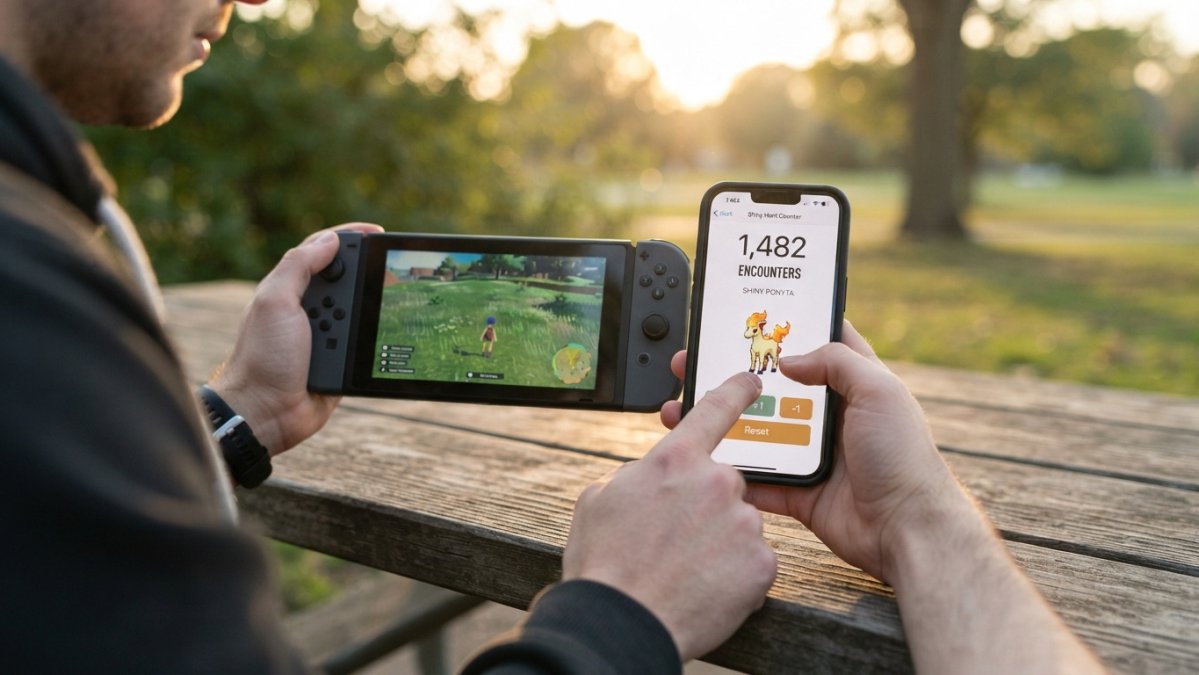
Shiny counter apps and general shiny tracker apps often overlap. The difference is whether the tool also tracks your broader collection. A dedicated counter is fine for a single hunt, but a tracker that links encounters to your dex gives you a fuller picture.
When you record an encounter, note the game, the target Pokémon and whether the hunt is ongoing or finished. That small habit keeps your history readable months later.
Tracking Alternate Forms, Regional Variants and Game-Specific Dexes
Forms, regional variants and game-specific dexes are where many trackers struggle. Some count every form as a separate entry. Others only track the base species. Know which approach your tool uses before you start a completion run.
Game-specific dexes add another layer. A Pokémon may appear in one title and not another, so a tracker needs to respect each game's list. Check whether the tool keeps those lists separate or merges them into one.
Be clear about what your completion percentage measures. A total that counts shiny variants and gender differences will look different from one that counts only species. Decide what you want to track, then confirm the tool matches it.
Privacy, Data Backup and Pricing Transparency
Your hunt history is a long-term record, so treat it like any other data you would not want to lose. Before committing to a tracker, check three things: where the data lives, how you get it out, and what happens if you stop using the app.
Data storage and account deletion. Look for a plain-language privacy note that says whether records are stored on your device, in the cloud, or both. If the app requires an account, confirm there is a visible way to delete it and that deletion removes your hunt history, not just your login.
Export and portability. The most useful trackers let you export your collection and hunt history in a standard format such as CSV. That gives you a backup you control and a way to move to another tool later without retyping hundreds of encounters. If an app offers no export, assume your data is locked in and weigh that against how long you plan to hunt.
Offline use and cross-device sync. Shiny hunts often happen in short sessions, sometimes without a stable connection. Check whether the counter and dex work offline and whether changes sync when you reconnect. Also confirm what happens when you switch phones: does signing in restore your saves, or do you need a manual backup?
Free versus paid limits. Rather than quoting prices, compare what each tier unlocks. DexTrack offers a free plan; for current plan details, check the DexTrack website directly, since pricing and feature limits can change. When comparing, list the features you actually use and confirm they sit in the free tier before you start a long hunt.
Backup habits that survive any app. Keep a periodic export, name saves after the game and target, and avoid editing old counts after a reset. Those habits make your records readable months later regardless of which tracker you choose.
Setting Up Your Shiny Counter and Tracking Your Next Hunt
Begin by creating a separate save for your next hunt. Name it after the game and target Pokémon so it is easy to find later. Next, add the Pokémon you are hunting and set the counter to zero.
Record each encounter as it happens rather than in batches. Late entries are where mistakes creep in. If you reset a hunt, log it as a reset instead of editing the old count.
When the hunt ends, mark the result clearly and move on to your next target. Keeping each hunt in its own record makes it simple to review your progress and plan the next run.
Frequently Asked Questions
What is the best app for shiny hunting?
The best app depends on what you hunt for. Look for per-encounter counters, elapsed hunt timers, support for the games you play, and offline access. DexTrack covers per-game progress and tracks shiny status across separate save files, which suits players running several hunts or Nuzlockes at once. Compare each option against the games you actually play before committing, and check whether the free plan covers the features you need.
Can I track shiny Pokémon separately for each game?
Yes, but how well this works varies by tool. A good tracker keeps a separate checklist for each game so a shiny caught in one title does not mark the same species complete in another. DexTrack organizes progress game by game, and you can keep main saves, Nuzlockes and replays in independent files so one run never overwrites another.
Is there a Pokémon tracker that supports separate save files?
Some trackers support multiple save files, which lets you keep a main playthrough apart from a Nuzlocke or a casual replay. When you compare options, check whether each save file has its own shiny and completion data, or whether everything shares one list. DexTrack supports multiple save files, so each playstyle keeps its own progress.
What features should I look for in a shiny Pokémon tracker?
Focus on four things: encounter counting, a hunt timer, clear shiny status for each species, and reliable backup. Check that alternate forms and regional variants are tracked, and confirm how your data is stored and whether you can export or delete it. Free-versus-paid limits matter too, so read what the free plan includes before you rely on it for a long hunt.